Organizing and Advertising Sales Incentives
A Practical Guide to Compliant Business Operations for Retailers in Serbia
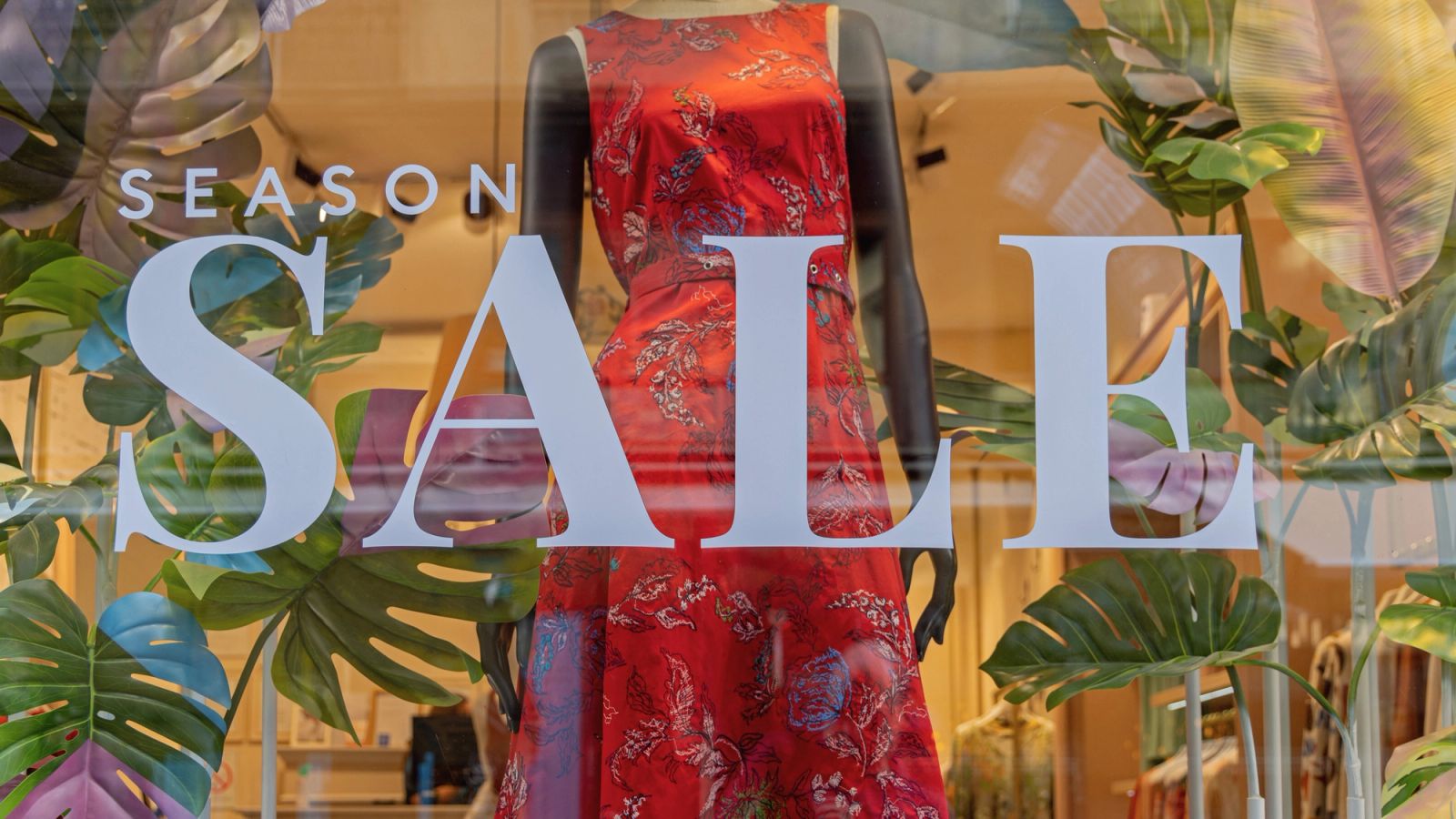
Foto: Baloncici / istockphoto.com
Introduction
Sales incentives represent one of the most important instruments for boosting sales and strengthening a retailer’s competitive position. Through various forms of benefits — price reductions, special-offer sales, clearance sales, promotional offers, gifts and other means of stimulating purchases — retailers seek to increase sales volume, attract new customers and reinforce the loyalty of existing ones.
However, organizing sales incentives is not left solely to the retailer’s business policy. It is governed by regulations aimed at market transparency, customer protection and fair market competition. These rules arise primarily from the Law on Trade, but also from the Consumer Protection Law of the Republic of Serbia, which together govern the conditions, implementation and advertising of sales incentives, as well as the retailer’s obligation to inform consumers accurately and clearly about the benefits offered.
The purpose of this Guide is to provide, in a clear and practical manner, an overview of:
- the most important types of sales incentives;
- the mandatory content of a sales incentive offer;
- the rules governing their advertising;
- a schematic overview of key obligations for retailers in Serbia.
This Guide is intended for retailers, employees in sales and marketing departments, and other persons involved in creating, organizing or advertising sales incentives.
Please note that this guide is provided for general informational purposes only. It does not constitute legal advice and cannot replace tailored legal analysis or advice in specific cases.
TYPES OF SALES INCENTIVES AND BASIC RULES
In modern business, sales incentives are among the most frequently used tools for attracting customers and increasing sales. Price reductions, “2 for 1” offers, gifts with purchase, discount coupons and loyalty programs are just some of the ways in which retailers seek to make their offer more competitive.
A sales incentive is an offer of goods under more favorable conditions than the retailer’s regular offer. The law recognizes the following types of sales incentives:
- goods with reduced utility value (e.g. due to damage or approaching expiry);
- vouchers and coupons;
- accompanying gifts with purchase;
- loyalty programs;
- promotional sale (for goods introduced into the offer for the first time);
- sale at a reduced price, which includes:
- clearance sales,
- seasonal sales, and
- special-offer sales.
Although all of these forms share the common goal of providing a certain benefit to customers, the rules that apply to their organization and advertising are not the same. For this reason, two levels of rules must be distinguished for each incentive:
- general requirements, which apply to all sales incentives (addressed in Section 2); and
- special requirements, prescribed for specific forms, relating to the duration of the incentive, the manner of displaying prices, the content of the offer, or the way in which the benefit is obtained (addressed in Section 3).
It is important for retailers to bear in mind that a successfully organized sales incentive requires not only an attractive offer, but also its clear, precise and transparent presentation. In practice, irregularities most often arise precisely because of unclearly defined conditions, improper display of prices, or advertising that may create a misleading impression of the scope of the benefit.
Recommendation for retailers:
Before organizing any sales incentive, it is advisable to check whether the internal decision or other act governing the promotional activity complies with all relevant rules. In doing so, it is necessary to take into account both the general requirements applicable to all sales incentives and the special conditions prescribed for the specific type of incentive.
MANDATORY ELEMENTS OF ALL SALES INCENTIVES
As noted in the previous section, general requirements apply to every sales incentive (applicable to all incentives), together with special requirements prescribed for specific forms (addressed in Section 3). This section addresses the general requirements.
Regardless of the type of incentive, the offer must be formulated so as to provide the customer with clear, accurate and complete information about the benefit offered. This is not merely a matter of good business practice, but also a legal obligation of the retailer.
Transparent information contributes to greater legal certainty, reduces the risk of misunderstandings and complaints, and strengthens customer trust in the retailer’s business.
Mandatory elements under the Law on Trade
A sales incentive offer must, in particular, contain:
- the TYPE of sales incentive being offered;
- the GOODS to which the incentive relates;
- the PERIOD OF VALIDITY of the incentive, including the start date and the end date, or the marking “while stocks last” in the case of a clearance sale;
- the SPECIAL CONDITIONS that must be met in order to obtain the right to the incentive.
Additional requirements under the Consumer Protection Law
The Consumer Protection Law additionally requires that sales incentives must:
- be CLEARLY and VISIBLY displayed;
- contain the CONDITIONS for obtaining the benefit;
- ensure CONSISTENCY between the advertised benefit and the benefit actually provided.
The retailer is required to comply with the conditions under which the incentive was advertised and to implement the benefits in accordance with the information made available to customers. In this respect, it is not sufficient for the information to be merely formally available; it must be presented in such a way that customers can easily notice, read and understand it before making a purchase decision. Information hidden in hard-to-access notices, in fine print, or in places where customers do not usually expect it does not fulfill the purpose of transparent information that the law seeks to ensure.
Recommendations for retailers:
Before publishing a sales incentive, it is advisable to check whether all mandatory elements of the offer are clearly and visibly displayed, and whether the conditions for obtaining the benefit are precisely defined and aligned with the way in which the incentive will be implemented in practice.
SPECIAL REQUIREMENTS FOR PARTICULAR TYPES OF SALES INCENTIVES
In addition to the general rules from the previous section, which apply to all sales incentives, special conditions are prescribed for certain forms that must be met when organizing and advertising them.
When organizing a specific sales incentive, the retailer is required to meet both the general requirements applicable to all sales incentives and the special requirements relating to that type of incentive. Non-compliance with the special rules may have the same consequences as a breach of the general rules, given that both are a regular subject of inspection and supervision.
Goods with reduced utility value
Where a sales incentive relates to goods whose utility value has been reduced due to a particular defect — such as damage, a manufacturing fault, expiry of the shelf life, or other similar circumstances — the retailer is required, in addition to the general information about the incentive, to clearly, visibly and unambiguously indicate at the point of sale the reason why the goods are being offered under more favorable conditions.
The purpose of this rule is to enable the customer to be fully informed about the characteristics of the goods and the reasons for their reduced price before making a purchase decision.
Example: If a technical device is sold at a discount due to damaged packaging, that circumstance must be clearly indicated at the point of sale.
Vouchers and coupons
In retail, vouchers and coupons may serve different purposes. In practice, they most often appear as:
- a means of obtaining a certain benefit upon purchase; or
- a means of payment, in which case they are also subject to special rules on fiscalization and tax regulations.
From the perspective of the regulations governing sales incentives, vouchers, coupons and other instruments issued for the purpose of obtaining a certain benefit must — in addition to the information that all sales incentives must contain — also include details of:
- the issuer of the voucher, coupon or other instrument for obtaining the benefit;
- their monetary value or the amount of the discount obtained by using them.
Accompanying gifts with purchased goods
When offering a sales incentive with an accompanying gift, the retailer may use the words “free of charge”, “pay one, get two”, “two for one” and similar expressions only if the customer does not bear any additional cost for the gift, apart from any delivery cost.
In addition, an accompanying gift is possible only if the retailer already offers the goods without the accompanying gift. Where the gift consists of an additional quantity of an already packaged product (e.g. “20% more product free”), the unit price of such a product must not be higher than the unit price of the same product without the additional quantity, and the burden of proof lies with the retailer.
Example: A retailer regularly sells a product at a price of RSD 400.00. It then organizes an incentive under the slogan “With the purchased product you get one more free”, but at the same time increases the product price to RSD 550.00. In such a situation, the use of the label “free” is not justified, because the additional product is effectively financed through the increased price of the basic product, so the customer does not obtain a genuine free benefit.
Key rules:
- labels such as “free of charge”, “free”, “pay one, get two” and similar messages may be used only if the customer really does not pay extra for the gift;
- the price of the basic product must not be increased in order to offset the value of the gift;
- a gift may only be offered together with a product that is available without the gift;
- where an additional quantity of a product is offered as a gift (e.g. “20% more product free”), the price per unit of measure must not be higher than the price of the regular packaging.
Loyalty programs
Loyalty programs — such as loyalty cards, point collection, or other systems of rewarding customers — represent a special form of sales incentive. These are benefits which the retailer, under clearly defined and published conditions, grants to customers in order to reward loyalty and encourage repeat purchases.
In order to avoid misunderstandings and potential complaints, the rules of a loyalty program should be clearly defined and easily accessible to all interested parties. It is advisable for the retailer to adopt an internal decision governing:
- the conditions for joining the program;
- the duration of membership;
- the benefits obtained; and
- the manner of their use.
The rules of a loyalty program should be published in a clear and transparent manner — for example, via the website and/or by displaying them at the retail outlet — so that customers become familiar with the conditions of membership and the benefits the program provides.
Recommendation for retailers:
Before establishing or amending a loyalty program, it is advisable for the retailer to adopt an internal act (decision) governing the program’s rules, including the conditions of membership, the benefits obtained, the duration of membership, the manner of using points or other benefits, and the procedure for amending the program. In addition, these rules must be clearly published and easily accessible to customers, in order to reduce the risk of misunderstandings, complaints and differing interpretations in practice.
Promotional sale
A promotional sale is a special form of sales incentive relating to goods that are introduced into the retailer’s offer for the first time. Such goods may be offered at a price lower than the price that will apply in regular sales, whereby a promotional sale may last no longer than 60 days.
The purpose of a promotional sale is to enable the retailer to present a new product to customers under more favorable conditions for a limited period of time. In this way, customers have the opportunity to become familiar with the new product at a lower price, while the retailer can stimulate initial sales and increase the product’s recognition on the market.
Key rules:
- a promotional sale may only be organized for goods introduced into the retailer’s offer for the first time;
- the goods may be offered at a price lower than the price that will apply in regular sales;
- a promotional sale may last no longer than 60 days;
- before marking a particular campaign as a promotional sale, it is necessary to check whether the product genuinely appears in the retailer’s offer for the first time;
- if the product was already part of the retailer’s offer, the rules applicable to other forms of sales incentives may apply to such a sales activity.
Sale at a reduced price
A sale at a reduced price is one of the most common forms of sales incentive and may be organized as:
- a clearance sale;
- a seasonal sale; or
- a special-offer sale.
Regardless of the form, the retailer is required to clearly display at the point of sale both the reduced price and the prior price of the product.
The prior price is the lowest price at which the retailer offered the goods during the period of 30 days before the start of the price reduction, except for perishable goods and goods with a short shelf life. For products that have been in the retailer’s offer for less than 30 days, the prior price is the lowest price at which the goods were offered during a period of at least 15 days before the start of the price reduction.
Example: A retailer may not display as the prior price a price of RSD 10,000.00 if the same product was also offered at a price of RSD 8,500.00 during the previous 30 days. In that case, for the purposes of calculating the reduction, the relevant price is RSD 8,500.00 as the lowest price applied during that period.
Continuous price reduction within the same incentive
Where the price of a product is gradually and continuously reduced further within the same sales incentive, the prior price is not re-determined after each reduction. In that case, the prior price is deemed to be the lowest price the retailer applied during the 30 days before the start of the first reduction.
Example: A retailer organizes a seasonal sale of a product whose price before the start of the reduction was RSD 10,000.00. At the start of the reduction, the price is lowered to RSD 9,000.00, after two weeks to RSD 8,000.00, and then to RSD 7,000.00, with no interruption of the reduction between these decreases. In such a situation, upon each subsequent reduction, the prior price displayed remains RSD 10,000.00 — and not RSD 9,000.00 or RSD 8,000.00 — because all these reductions are considered part of a single uninterrupted incentive.
Exception: short-term special-offer sales. Where a retailer organizes a special-offer sale lasting no longer than three days, it is not required to display the prior price and the reduced price; it is sufficient to clearly indicate the percentage of the discount granted (for example, special-offer sales during “Black Friday” lasting up to three days).
In addition to these rules, which apply to every sale at a reduced price, special conditions are prescribed for particular types of reductions, relating to the reason for organizing the reduction, its duration and the manner of its implementation.
Clearance sale
A clearance sale is a sale of goods at a price lower than the prior price, in the event of:
- the cessation of the retailer’s business;
- the cessation of business at particular outlets; or
- the cessation of the sale of particular goods.
When organizing a clearance sale, the goods that are the subject of the sale must be physically separated from goods sold under regular conditions. In addition, from the moment the clearance sale is announced until its conclusion, the retailer should not procure new quantities of the goods that are the subject of the clearance sale and include them in the same sale.
Key rules:
- a clearance sale may only be organized for the reasons prescribed by law;
- goods on clearance sale must be physically separated from other goods;
- after the clearance sale is announced, it is not permitted to procure and include new quantities of the same goods in the clearance sale;
- customers must be clearly informed that it is a clearance sale and of the reason for organizing it.
Seasonal sale
A seasonal sale is the sale of goods at reduced prices after the end of the relevant sales season.
It may be organized no more than twice a year, namely:
- starting in the period between 25 December and 10 January;
- starting in the period between 1 and 15 July.
A seasonal sale may last no more than 60 days per seasonal sale.
Special-offer sale
A special-offer sale is a sale of goods at a price lower than the prior price and may last no longer than 31 days.
Key rules:
- the price of the product must be lower than its prior price (the price during the 30 days before the start of the special offer);
- the duration of the special-offer sale may not exceed 31 days;
- the rules on displaying the reduced price and the prior price must be observed, except where the special-offer sale lasts no longer than three days.
ADVERTISING SALES INCENTIVES
Organizing a sales incentive does not end with defining the benefit for customers. An equally important aspect is the manner in which such a benefit is communicated to the market.
Advertising of sales incentives must be clear, accurate and transparent, so that customers can make an informed purchase decision and correctly understand the conditions under which the benefit is obtained. For this reason, special rules are prescribed with the aim of preventing misleading advertising, fictitious price reductions and other practices that could mislead customers as to the scope and content of the benefit offered.
Some of the most important rules concerning the advertising of sales incentives are as follows.
Availability of goods
It is not permitted to advertise goods that are available in such limited quantities that it is evident that the aim is to attract customers in order to induce the purchase of other goods, unless the quantity of goods available on the day the campaign begins is clearly indicated.
Example: A retailer advertises a product at an exceptionally favorable price in order to attract customers to the store, although it has only a few units of that product. Such advertising may be problematic if the available quantity is not clearly indicated at the start of the campaign.
Displaying the percentage of the reduction
Where a percentage of reduction is displayed in an advertisement, the highest advertised percentage may only be displayed if it relates to at least one fifth of the total assortment of goods covered by the campaign at each point of sale.
Example: If a store advertises “Reductions up to 70%” and the campaign covers 100 items, at least 20 items must be reduced by 70%. It is not sufficient for the stated reduction to relate to only one or a few products.
Prohibition of fictitious price reductions
It is not permitted to advertise false clearance sales, fictitious price reductions or non-existent benefits. In particular, it is prohibited to display inaccurate prior prices or to create the impression that significant savings have been achieved when this is objectively not the case.
Example: If a product was regularly sold at a price of RSD 8,000.00, and immediately before organizing the campaign the price is increased to RSD 10,000.00, after which “20% off” is advertised and the product is again sold for RSD 8,000.00, in the event of an inspection the question may arise as to whether the advertised reduction represents a genuine benefit for the customer or a fictitious discount.
Restrictions on benefits for certain categories of customers
Where a price is advertised that does not apply to all customers, all restrictions must be clearly, visibly and unambiguously indicated. The retailer is required to specify:
- for which categories of customers the price applies;
- at which outlets or through which sales channels it applies;
- its period of validity.
Example: If a price is advertised that applies exclusively to loyalty program members, pensioners or students, that circumstance must be clearly stated in the advertisement itself.
Goods with defects or of lower quality
Where advertisements compare the prices of products of different quality — that is, products with defects and products without defects — the customer must be clearly informed that the lower price is a consequence of a particular defect, damage or other circumstance affecting the value of the product.
Example: If a technical device is sold at a lower price due to damaged packaging or other defects, the retailer is required to clearly indicate this fact, so that the customer does not gain the impression that it is an entirely identical product that is merely on sale.
Recommendation for retailers:
Before publishing a promotional campaign, it is advisable to check whether the advertisement contains all information that is significant for the customer and whether an average customer, based on the advertisement alone, would be able to correctly understand the scope and conditions of the benefit offered. This significantly reduces the risk of complaints, objections and irregularities during inspections.
Misdemeanour consequences
In addition to reputational risk and possible customer dissatisfaction, irregularities in the organization and advertising of sales incentives may also have misdemeanour consequences.
The prescribed fines are not negligible: for a retailer operating as an entrepreneur they may amount to RSD 40,000, while for a legal entity they are imposed in the amount of RSD 100,000, together with an additional fine for the responsible person within the legal entity.
For this reason, it is advisable to verify compliance with the relevant regulations before launching a promotional campaign, particularly with regard to the manner of displaying prices, the amount of the discount and the conditions for obtaining the benefit.
SCHEMATIC OVERVIEW OF KEY OBLIGATIONS
This section provides a concise overview of the most important obligations addressed in the previous parts of the Guide.
For every sales incentive, general requirements apply (the content of the offer applicable to all incentives) and, in addition, special requirements prescribed for the specific type of incentive.
General requirements — content of the offer applicable to ALL types of sales incentives
The offer of every sales incentive must contain:
- the TYPE of sales incentive being offered;
- the GOODS to which the incentive relates;
- the PERIOD OF VALIDITY of the incentive;
- the SPECIAL CONDITIONS that must be met in order to obtain the right to the incentive.
In addition to the general requirements, the following special requirements apply to particular types of incentives:
Special requirements for particular types of sales incentives
- Goods of reduced value — Mandatory display of the reason for the reduced value of the goods at the point of sale.
- Vouchers / coupons — Must contain: details of the issuer; and the monetary value or the amount of the discount.
- Accompanying gifts — the customer may not bear any additional cost for the gift; the goods must be available without the accompanying gift.
- Loyalty programs — Mandatory definition and public disclosure of the conditions for obtaining the benefit.
- Promotional sale — only goods introduced into the retailer’s offer for the first time; duration of no more than 60 days.
Sale at a reduced price
For all forms of sale at a reduced price (except for the exception noted above), the mandatory display of the reduced price and the prior price applies, together with the following additional conditions by type:
- Clearance sale — The reason for the clearance sale is indicated, together with the marking “while stocks last”, where applicable.
- Special offer — Duration of no more than 31 days.
- Seasonal sale — carried out during the periods prescribed by law; duration of no more than 60 days per reduction.
We hope that this Guide will be useful in practice and will contribute to a better understanding of the obligations arising from the Law on Trade and the Consumer Protection Law.
We would be pleased to hear your feedback or suggestions for topics we could cover. Feel free to contact us at [email protected].
If you have any questions regarding the application of these regulations or require legal support in aligning your business operations, we remain at your disposal.
This article is for informational purposes only and does not constitute legal advice. For legal consultation, feel free to contact us.
Stanković & Mijatović